
HomeHow it works
How it works
One journey, seen from both front seats.
Conductor is a carpooling scheduling platform: people who are already driving a route publish it, people who need that route book a seat on it, and the cost of the journey is split between everyone in the car. Scroll through a single week and watch both apps move together.
Carpooling
Several people who are going the same way travel in one car instead of several, and share what that journey costs.
Scheduling
Trips are published and booked in advance, for a stated time. Nothing is hailed, and nothing is dispatched.
Split by seat
One journey has one cost. It is divided between the seats travelling in it, so more seats means less each.
Chosen, both ways
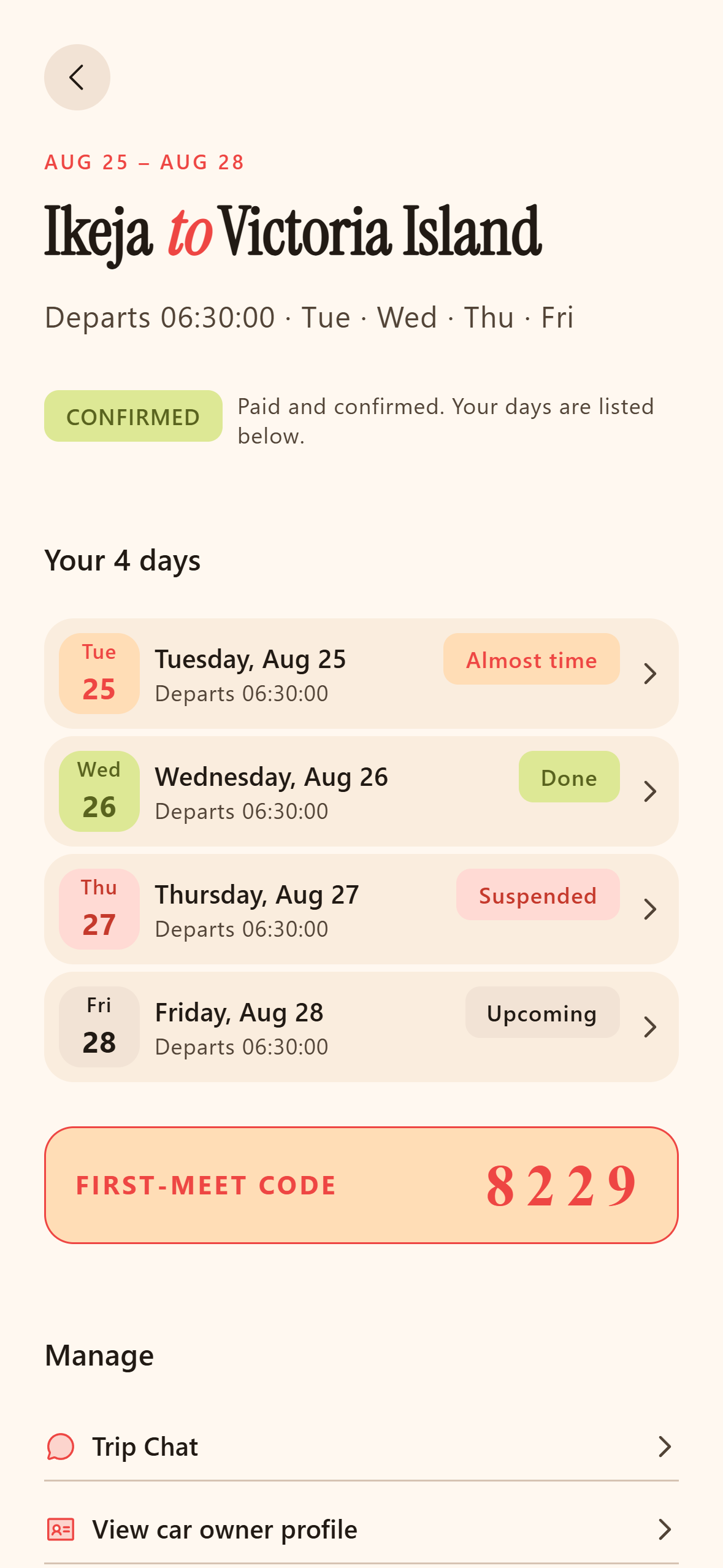
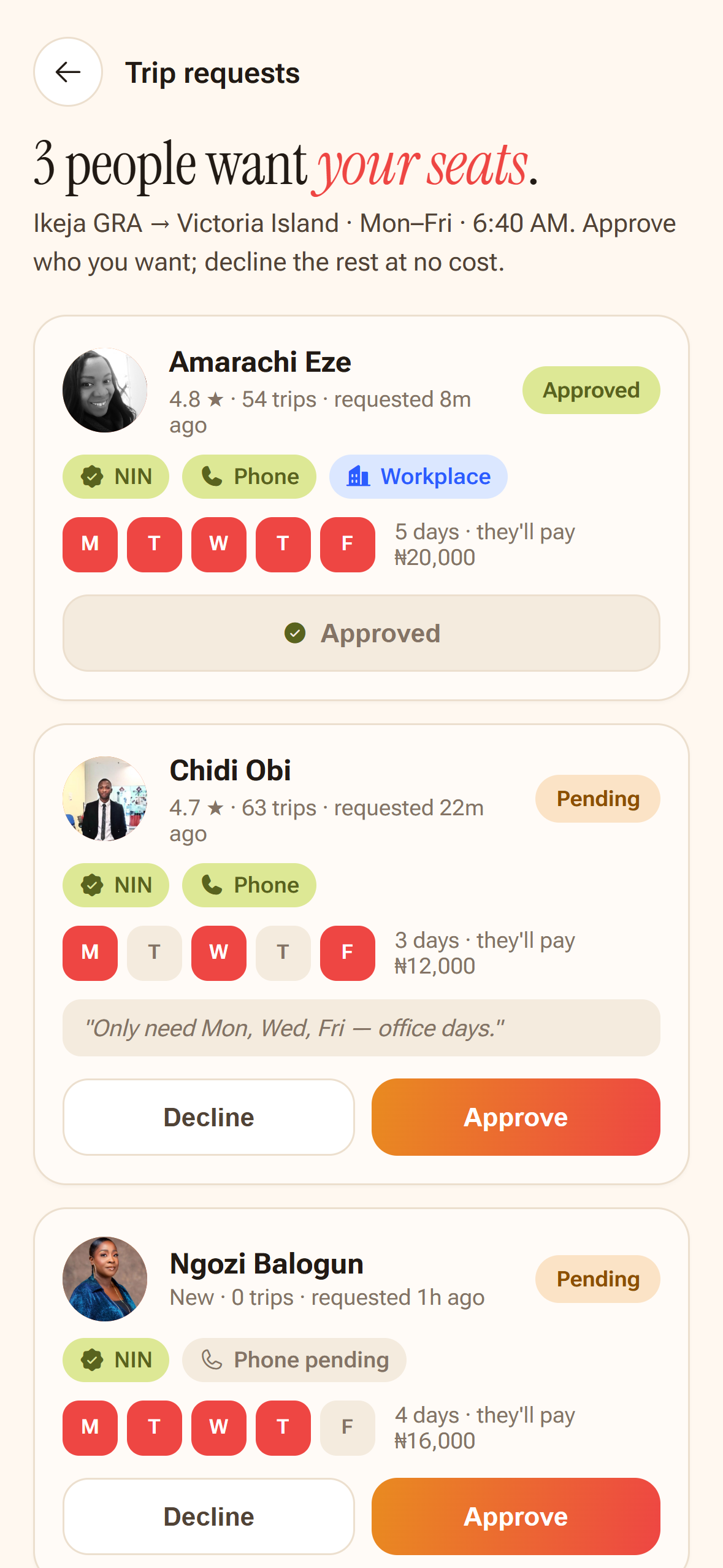
The passenger picks the car owner. The car owner approves the passenger. Either can decline without a reason.
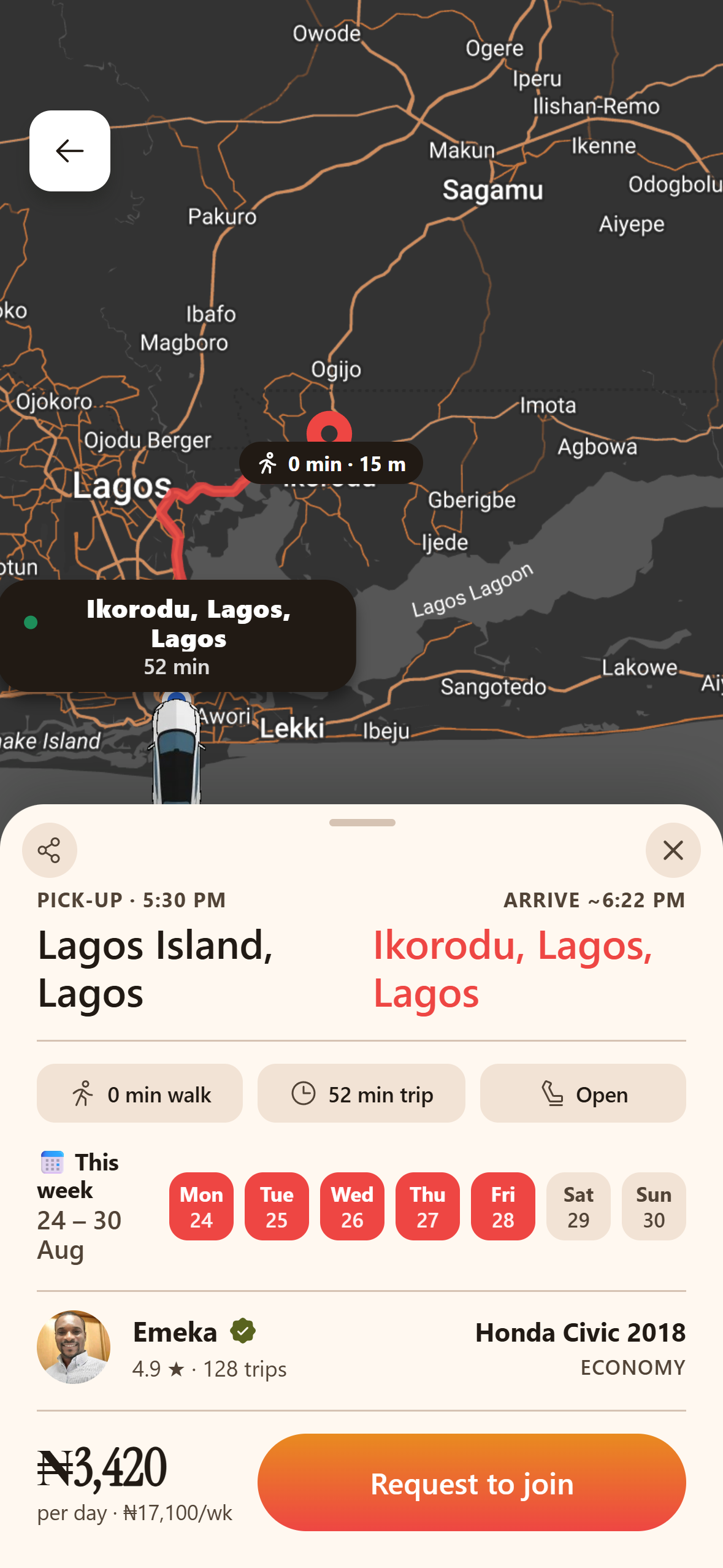
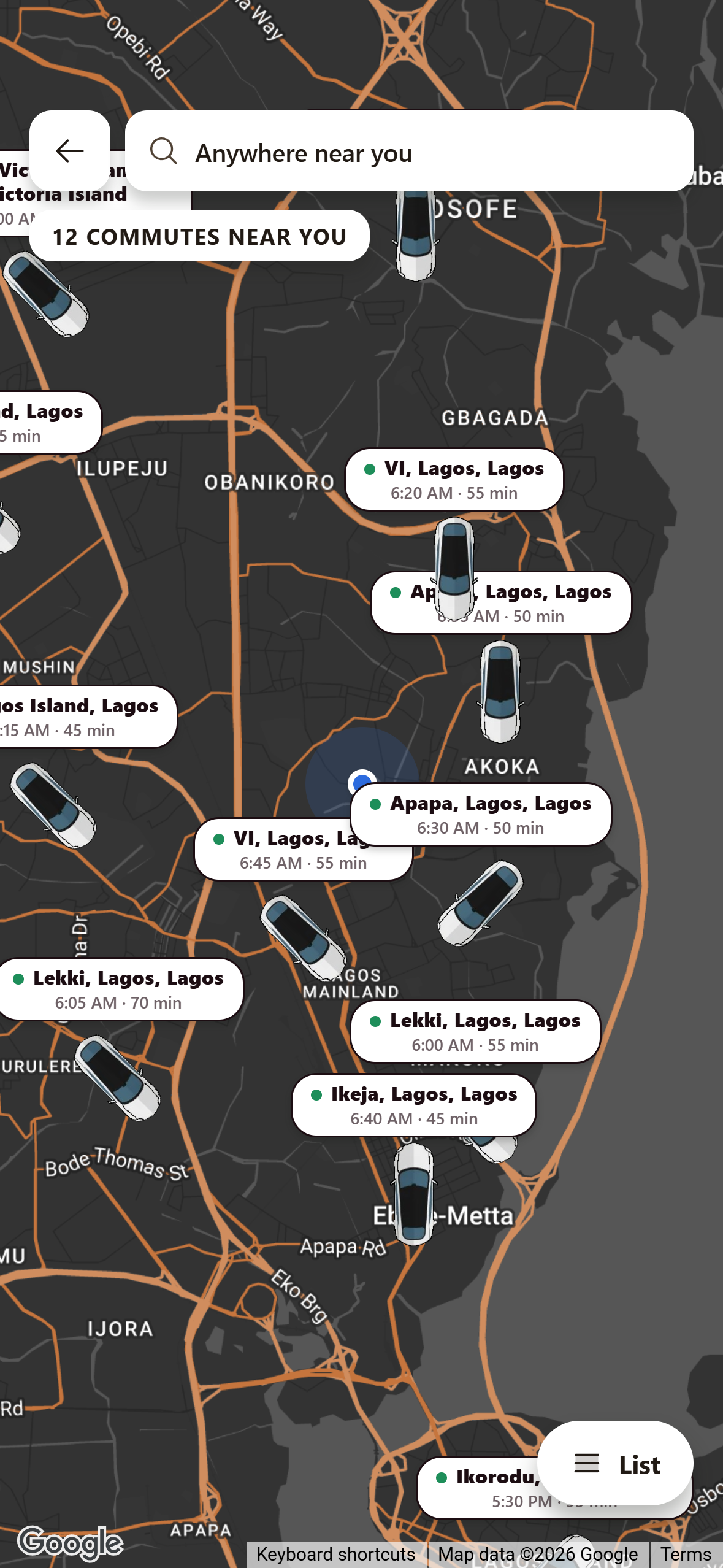
See who is already travelling your way
The map shows every published trip around you for the day you pick, each priced per seat. Instead of asking a stranger to come for you, you are looking at journeys that already exist — several cars, several destinations, all heading roughly where you are going. Tap any one and it opens up: the exact route, the pick-up time, the seat price and who is driving.
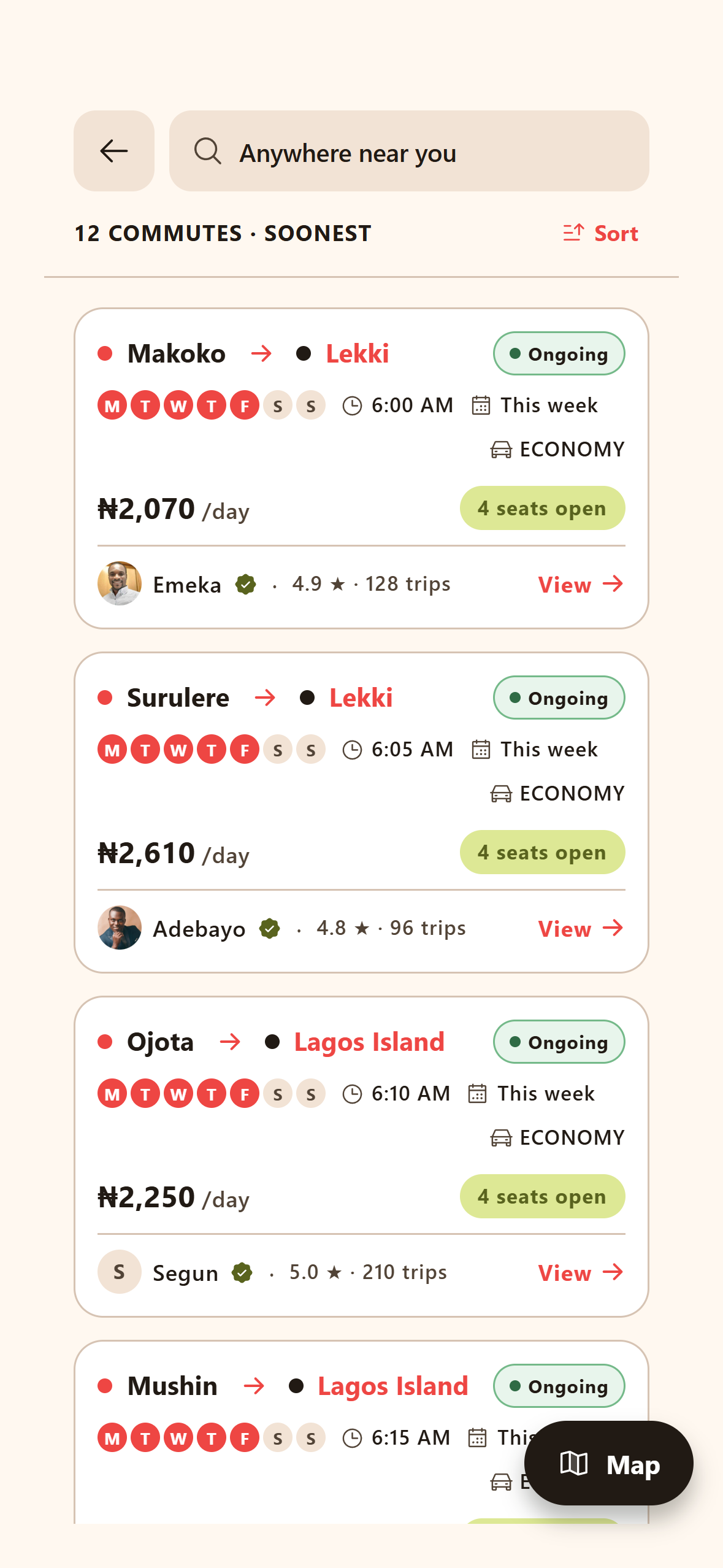
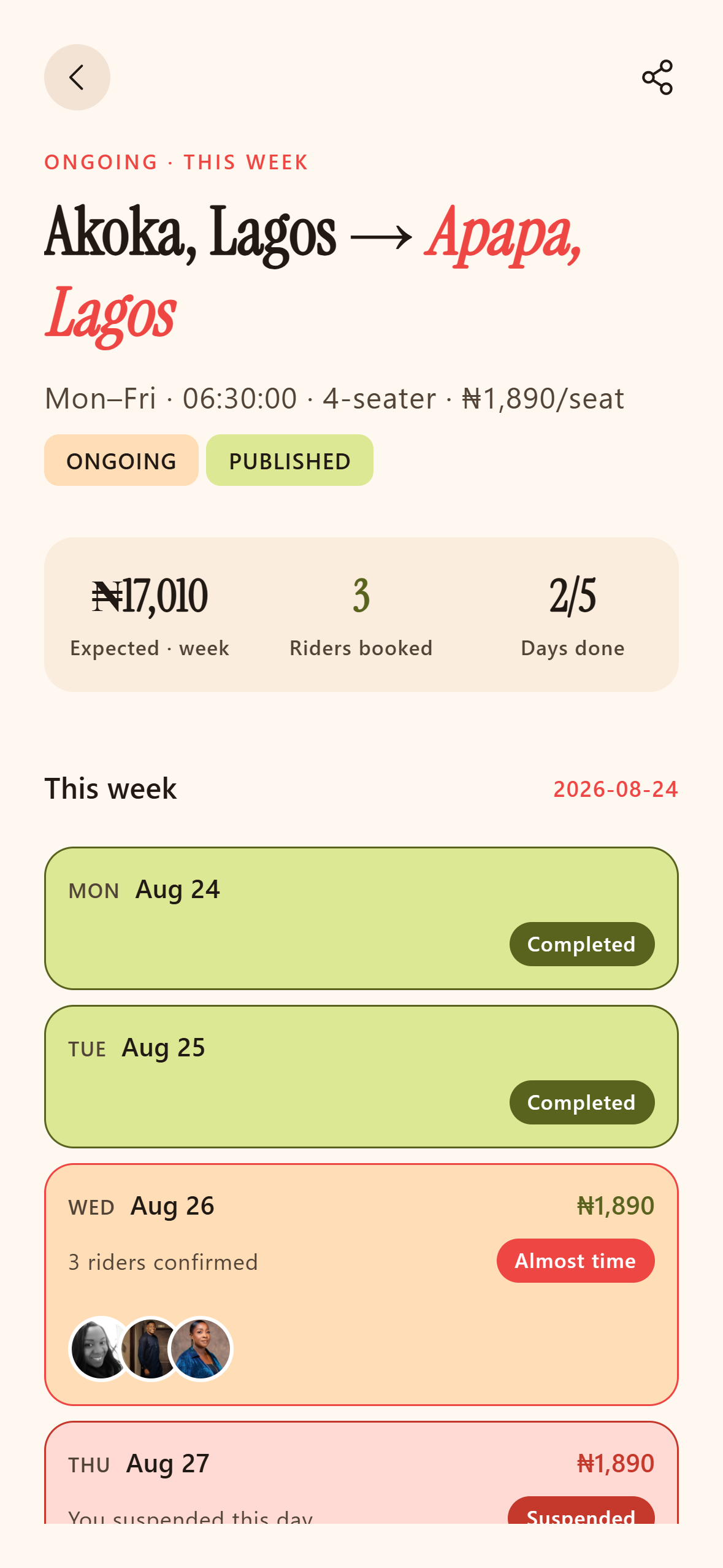
Trips are published days before you travel
Conductor is a scheduling platform, not a hailing app — nothing is summoned on demand. A car owner creates and publishes the journeys they will make in the days ahead. Passengers find those trips, join the ones they need and pay for them before the day arrives, so by the time the morning comes the whole thing is already settled.
Pick your seat — or keep one back
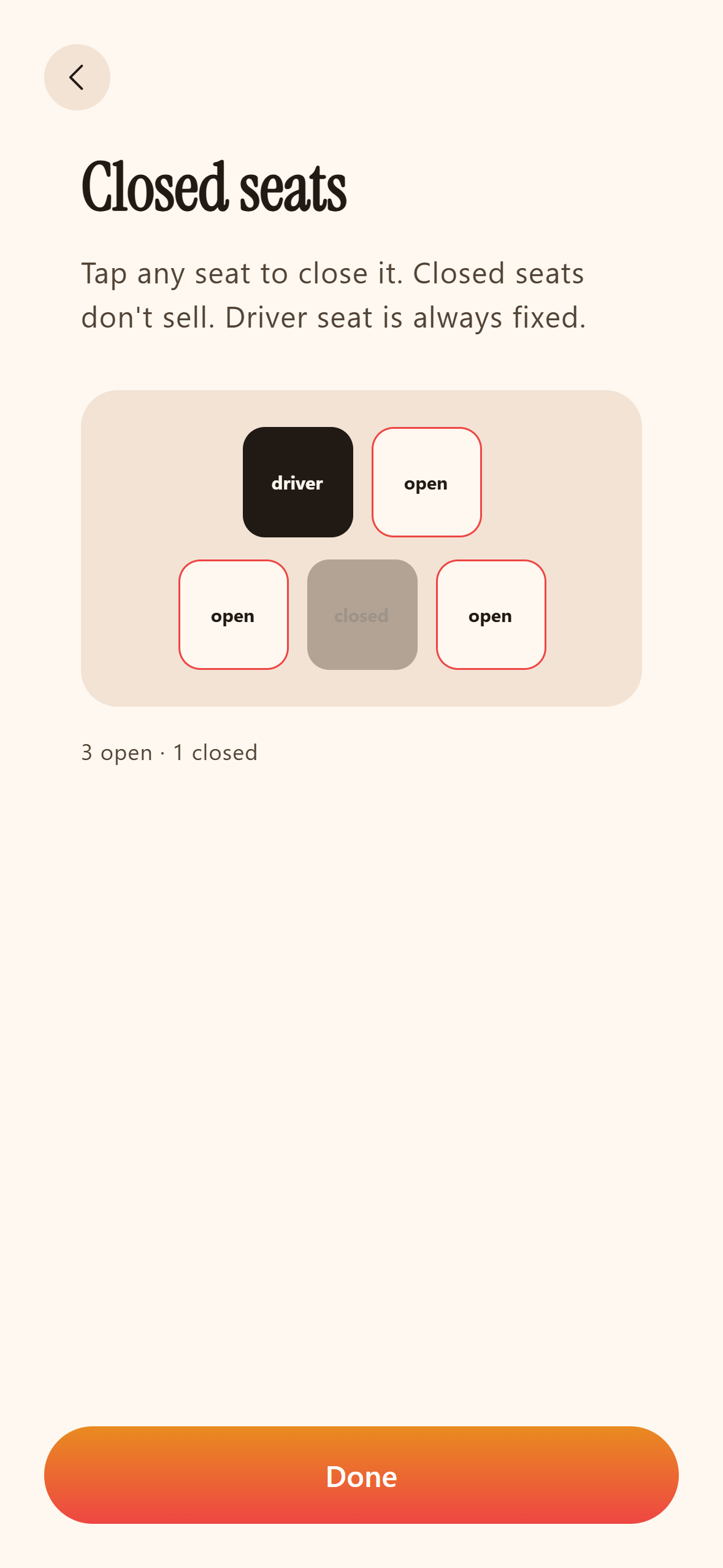
Comfort is a choice here, not a lottery. When you pay, you choose exactly where you sit — up front, or the back-left window — and that seat is held the moment the payment lands. On the other side, the car owner decides which seats to sell at all: open three and keep the fourth for a partner, a friend, or simply a lighter ride. Nobody is ever squeezed in beside a stranger they did not agree to.
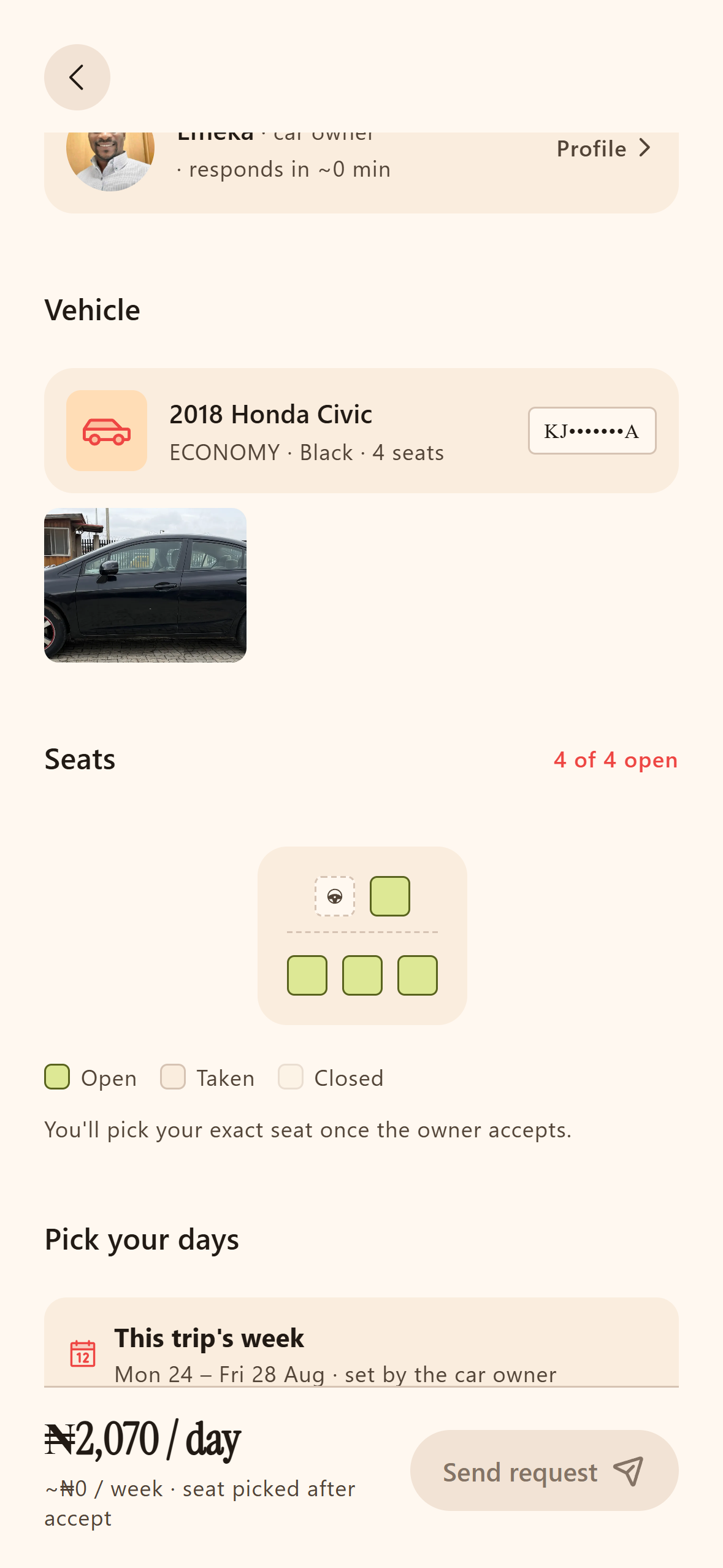
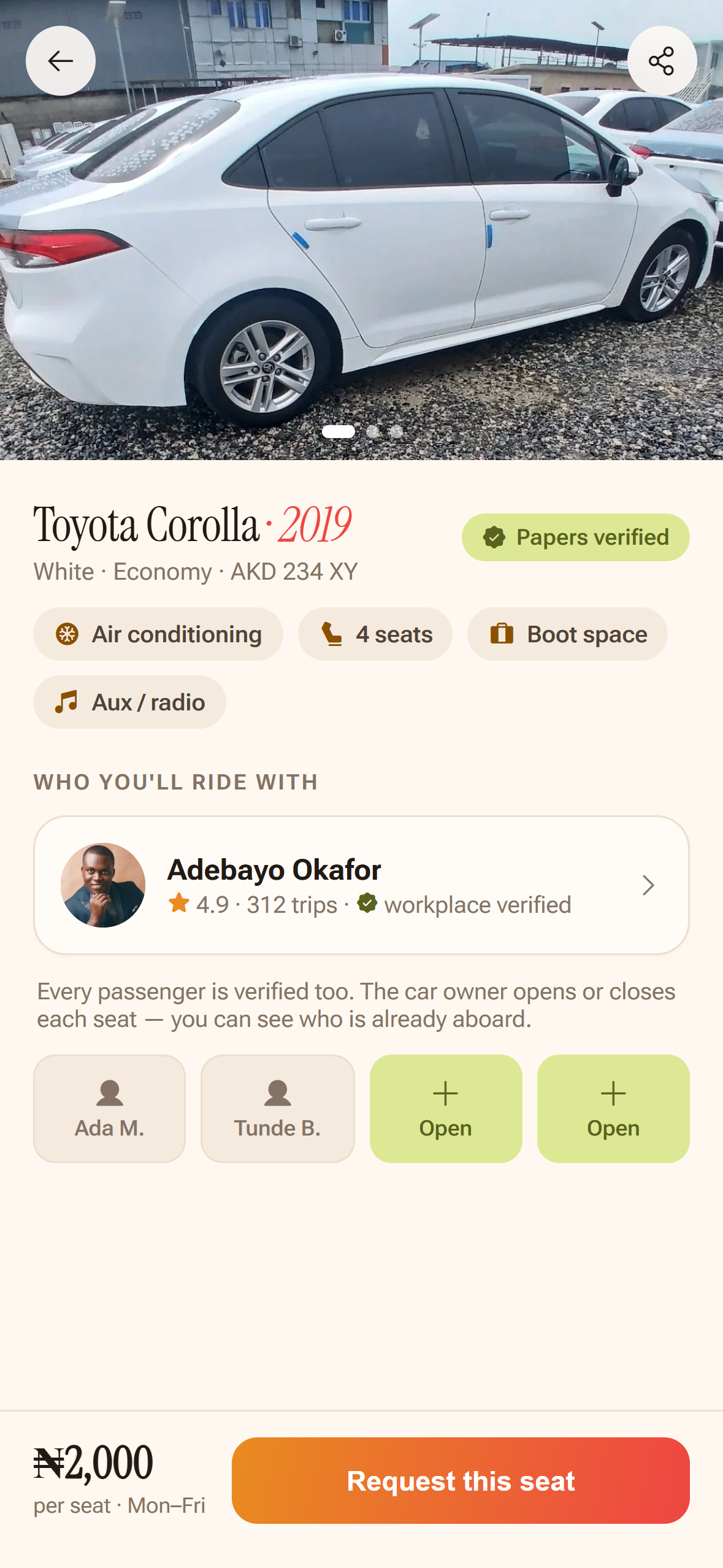
You choose the car, and see who you’ll ride with
Filter by vehicle — saloon, SUV or bus — before you look at a single driver, so comfort and air conditioning are a choice, not a hope. You also see exactly who else is aboard: every passenger is verified, and the car owner can open or close individual seats to shape who joins the trip.
Nobody is ever assigned to anybody
This is the part that surprises people: no match is forced on either side. The passenger asks a specific car owner; the car owner reviews who is asking and approves only the people they want. Either side can decline, as often as they like, without giving a reason — the most control either of you has ever had over a daily commute.
A seat costs a fraction of the whole car
A journey has one cost. Divide it between the people travelling and each pays a share rather than the full fare — three seats sharing is roughly a third each of what that trip would cost alone. The passenger sees exactly what their seat costs; the car owner sees what the whole trip earns. The app prices it for the route and locks it at booking.
You pay for the week; drivers are paid trip by trip
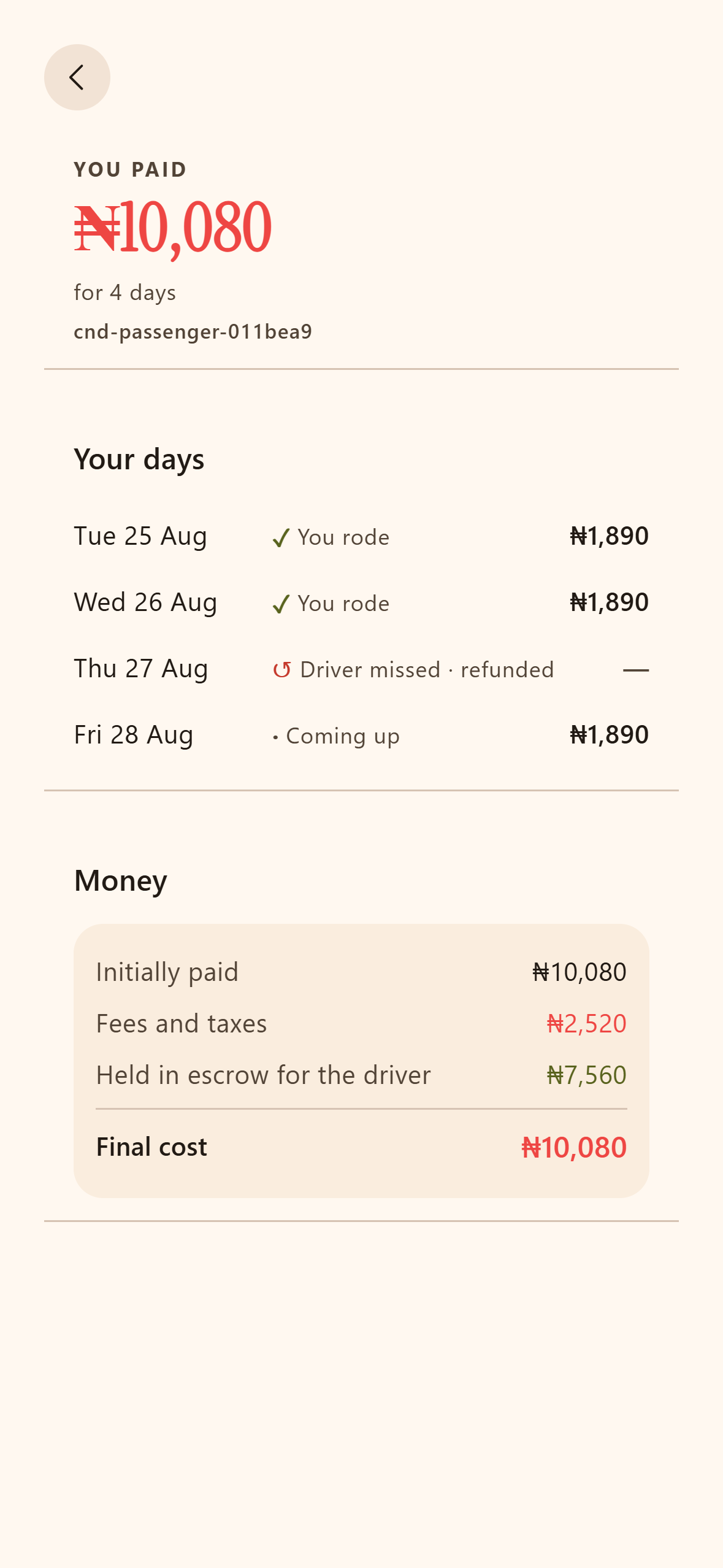
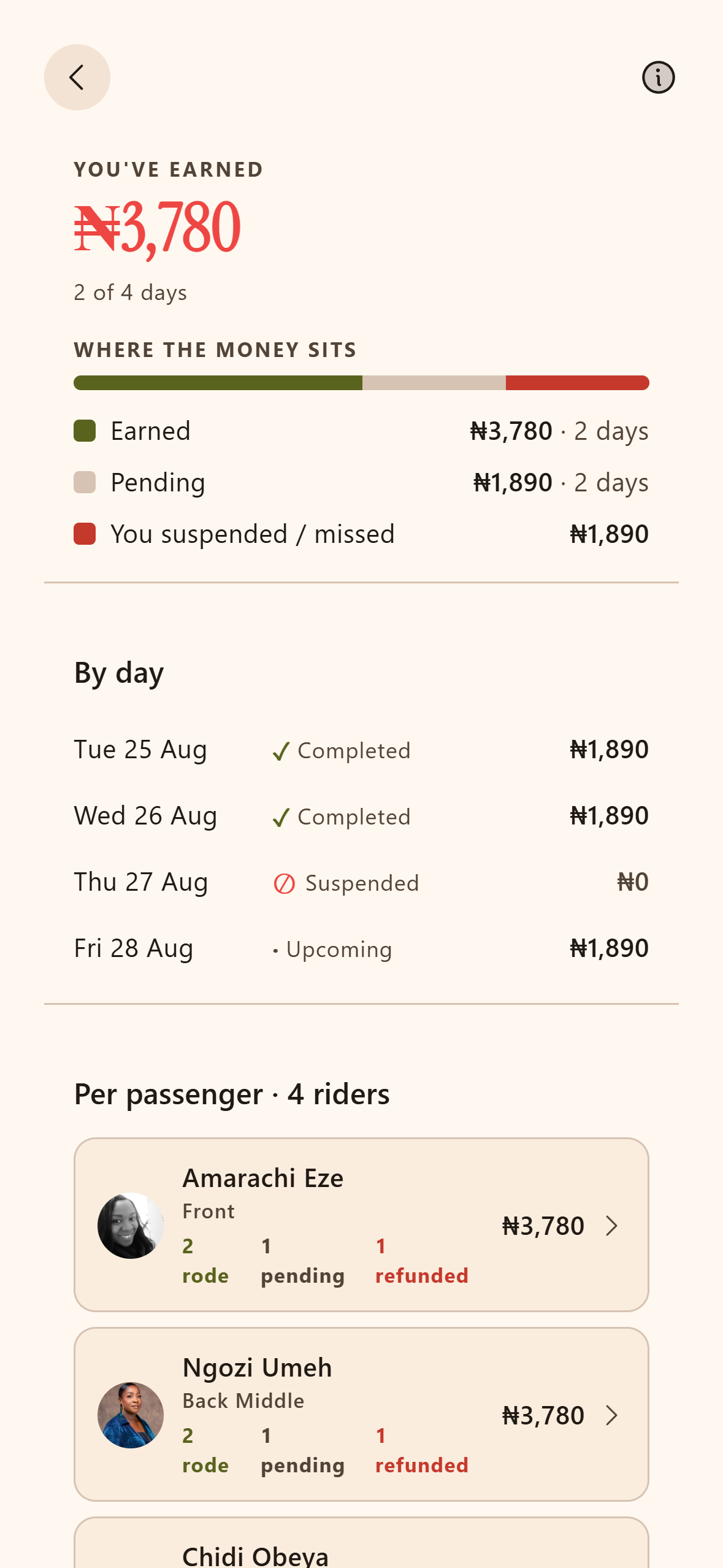
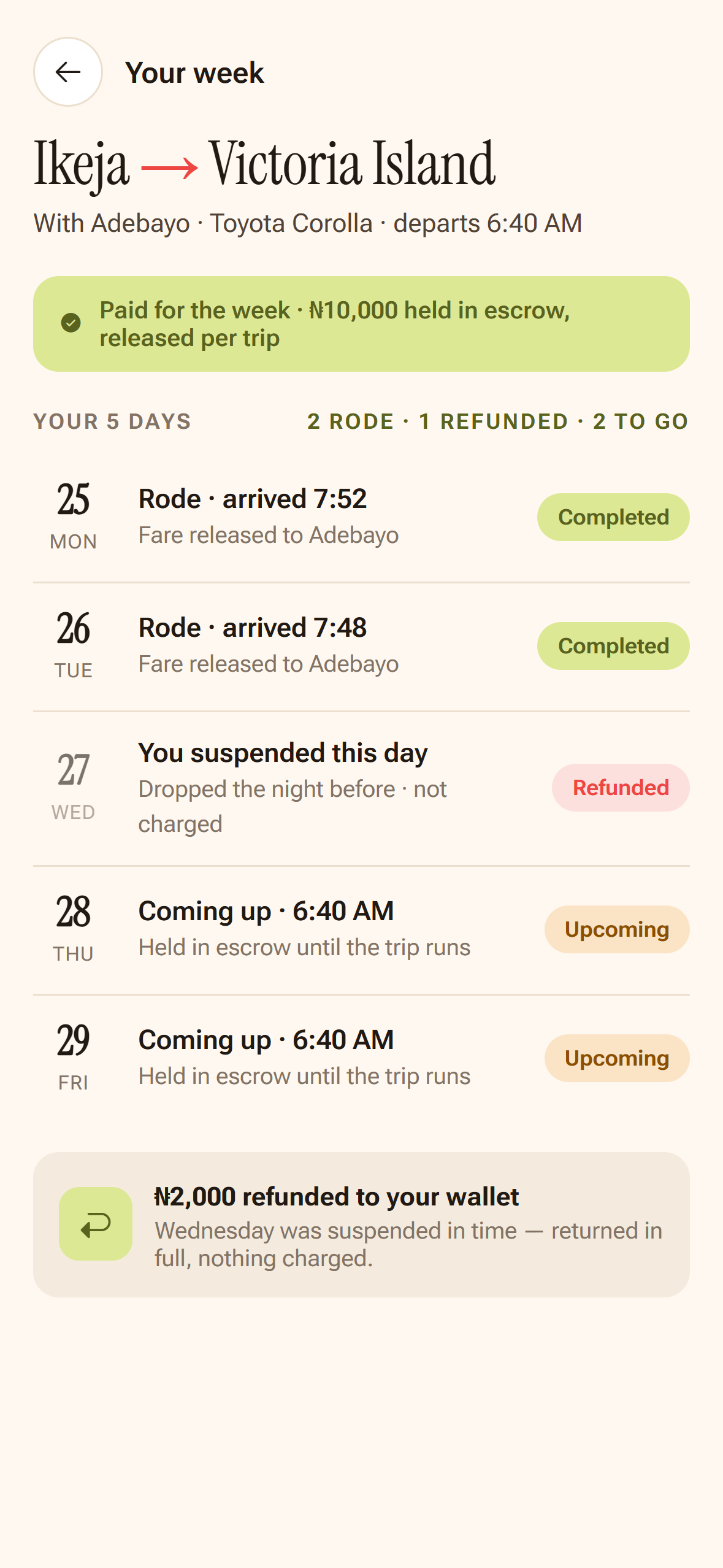
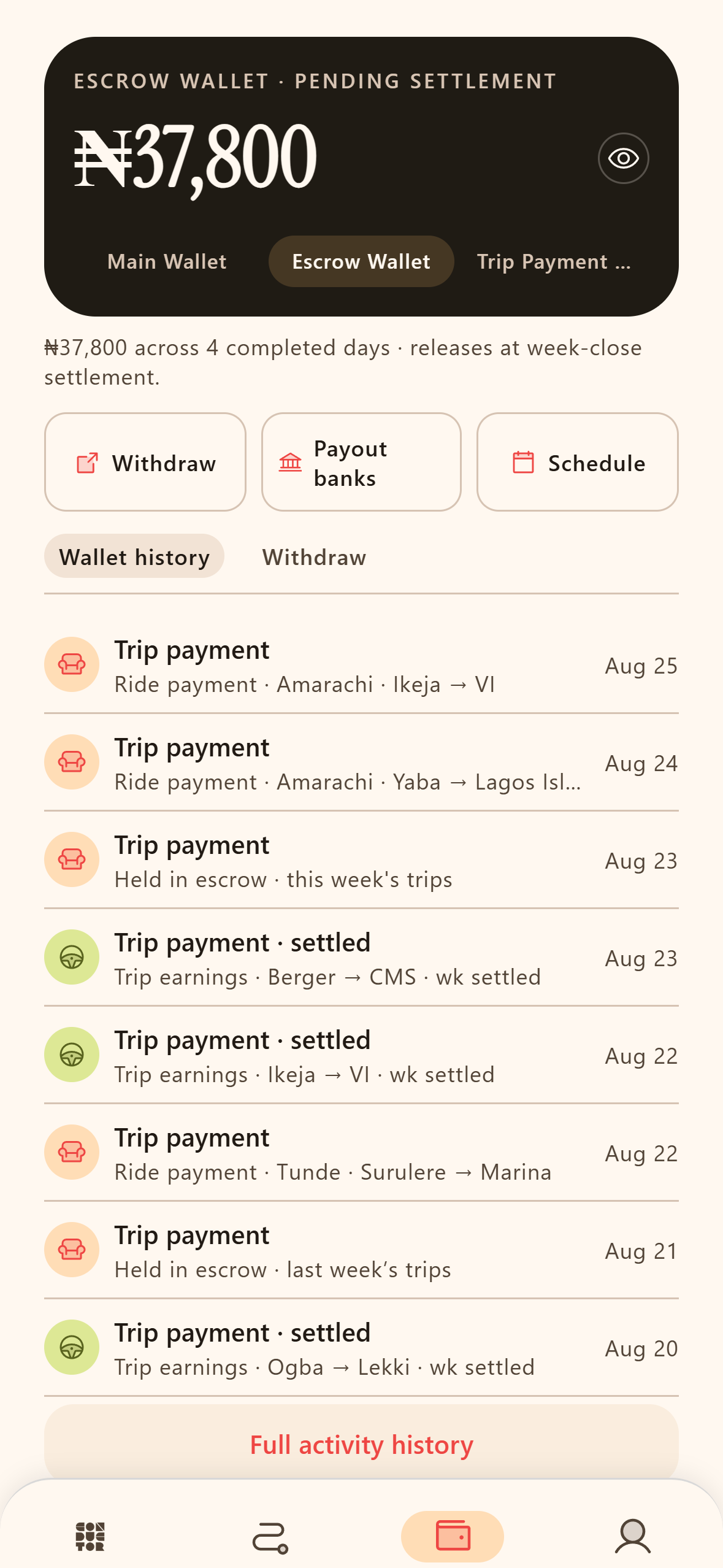
Add your week and you pay for all of it at once, so nobody counts notes at a junction — but the money sits in escrow, not with the driver. Each car owner is paid only after their own trip runs. And any day that does not happen — you suspend it, or the car owner does — is refunded to you in full.
The journey, and where you meet
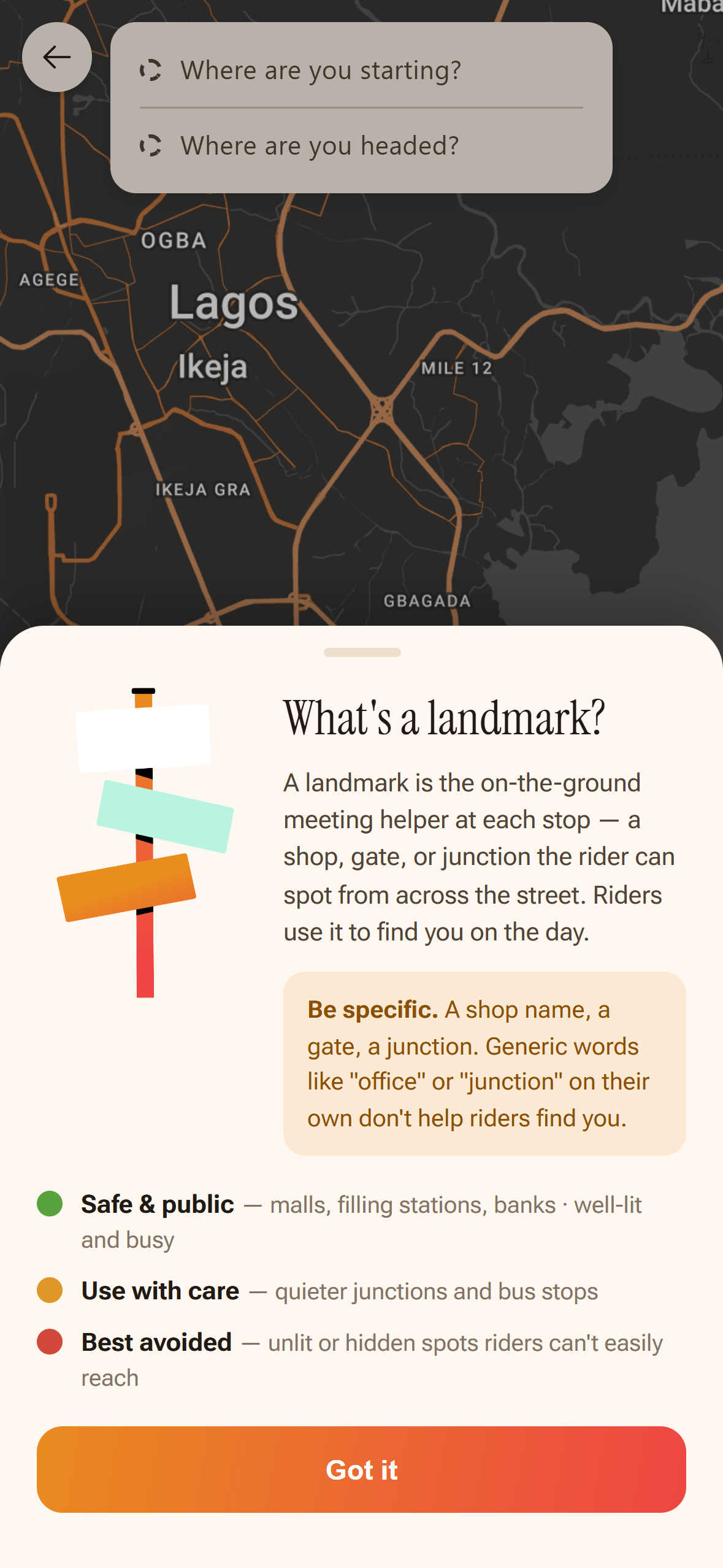
You meet at a named landmark on the route the car was already taking — a filling station, a mall, a familiar junction — chosen because it is public, well-known and safe to wait at, never a pin down an unmarked street. From there both sides can share the live trip with family, and either can message the other if the traffic shifts.
Identity first — nobody here is anonymous
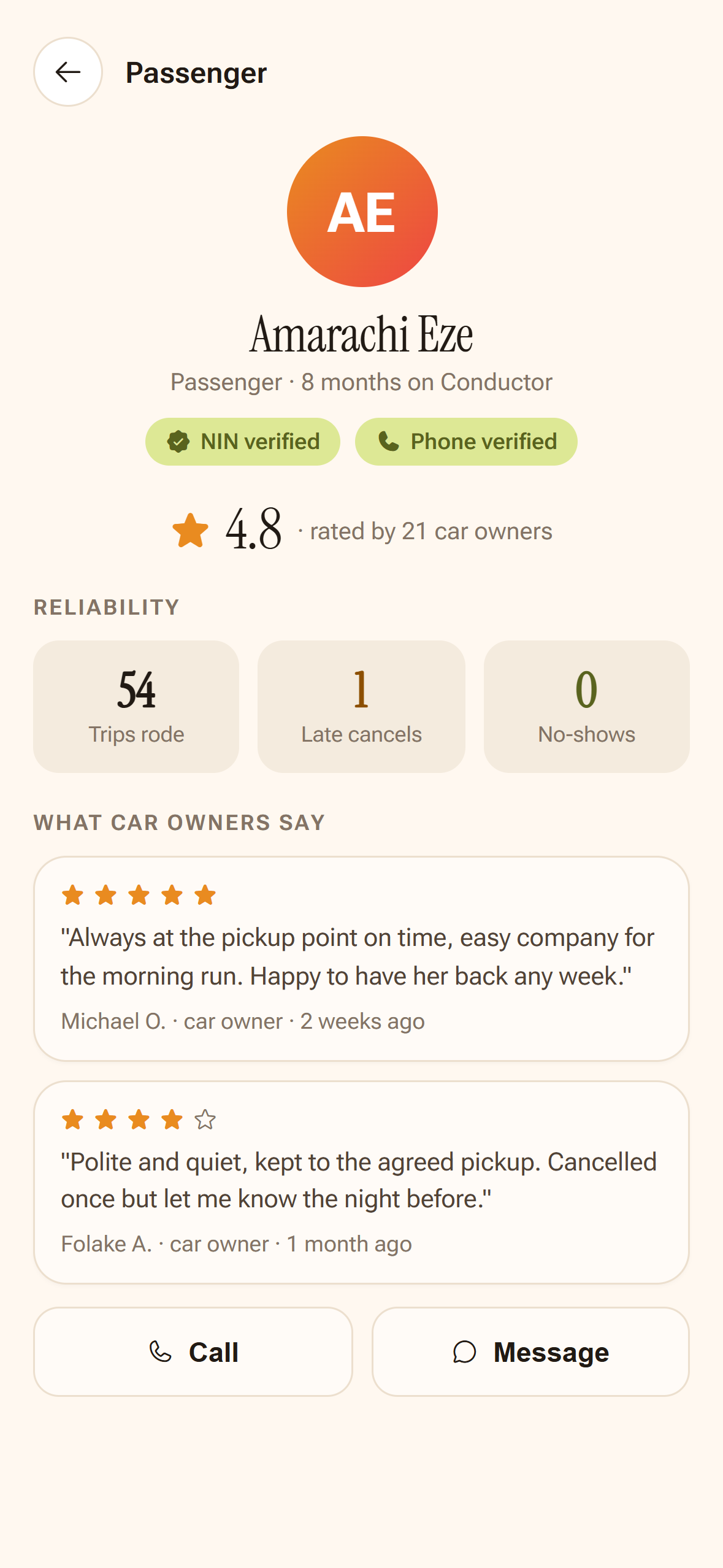
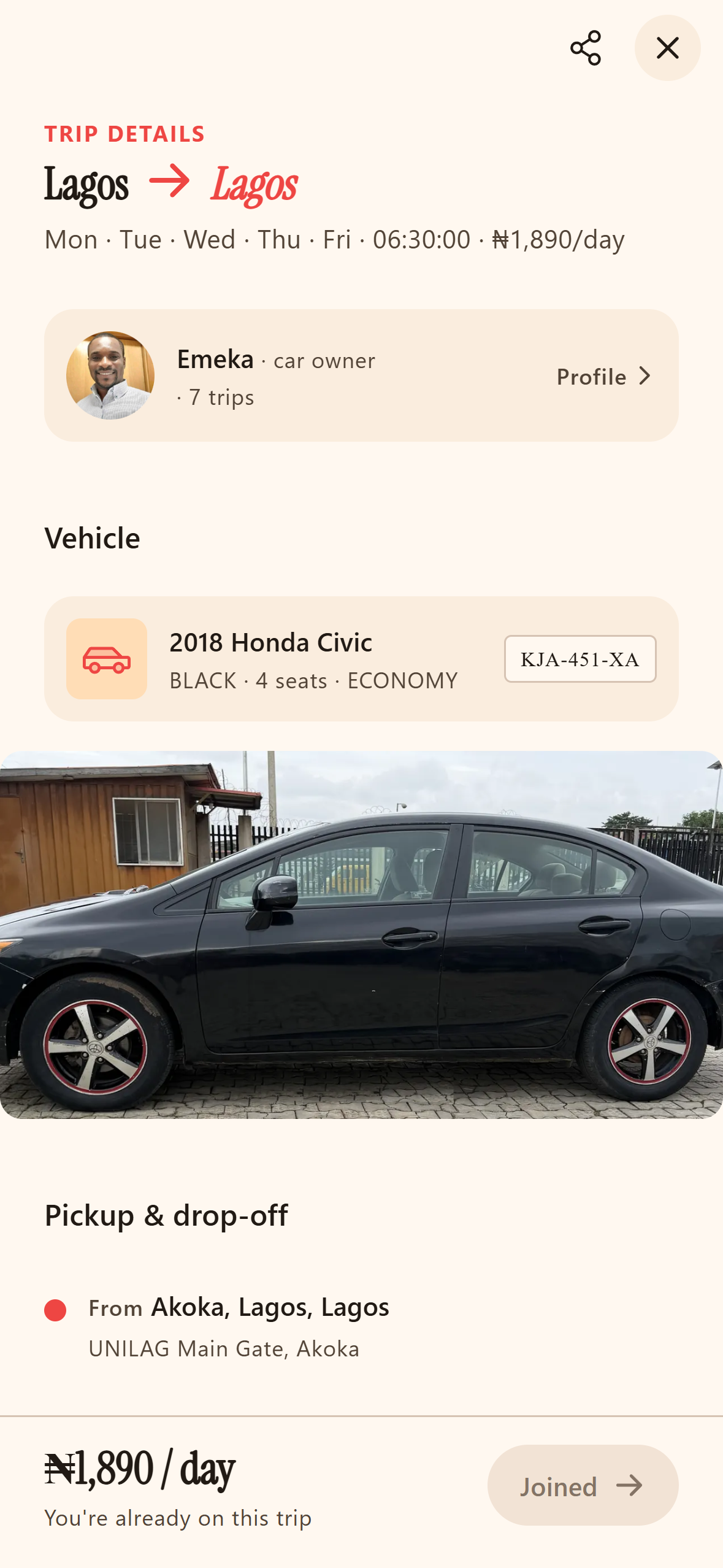
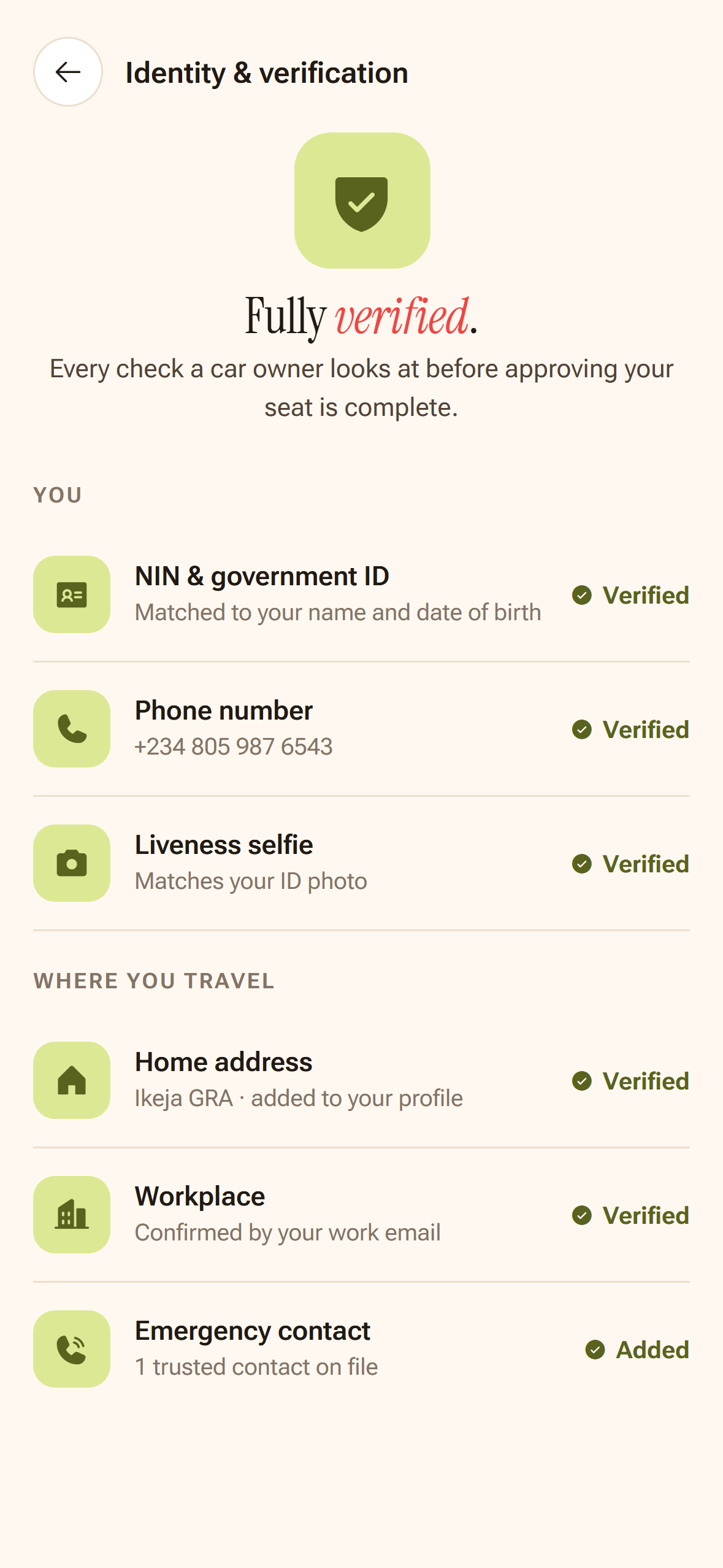
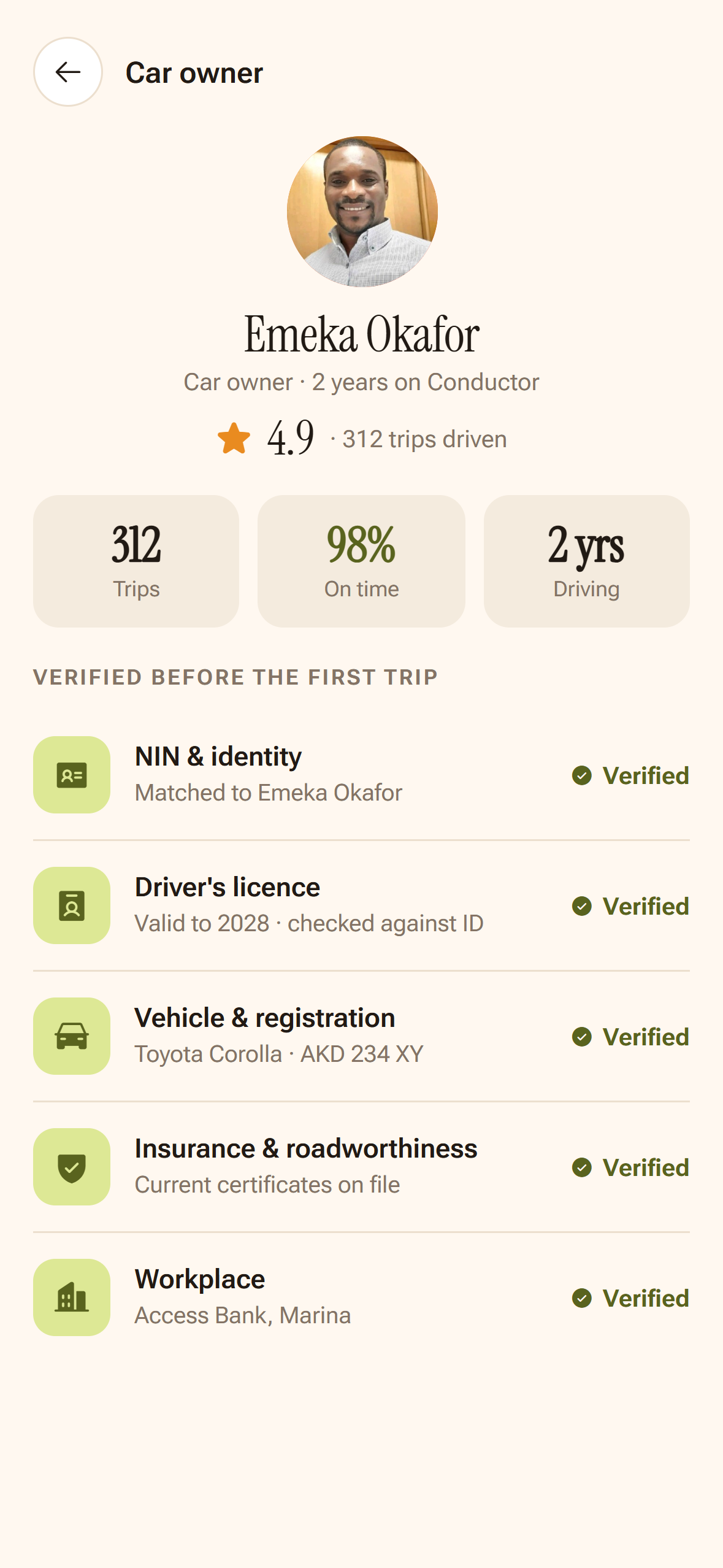
Security starts before anyone gets in a car. Identity is verified on both sides ahead of a first trip: passengers clear NIN and phone, car owners add licence, vehicle papers and roadworthiness — and each of you sees the other’s verification and rating. Every passenger and every car owner is rated after each trip, and either side can flag a problem: raise it and your money is protected until it is put right. A name here cannot be discarded and remade after a bad trip, which is exactly what makes every rating mean something.
Travel with people from communities you know
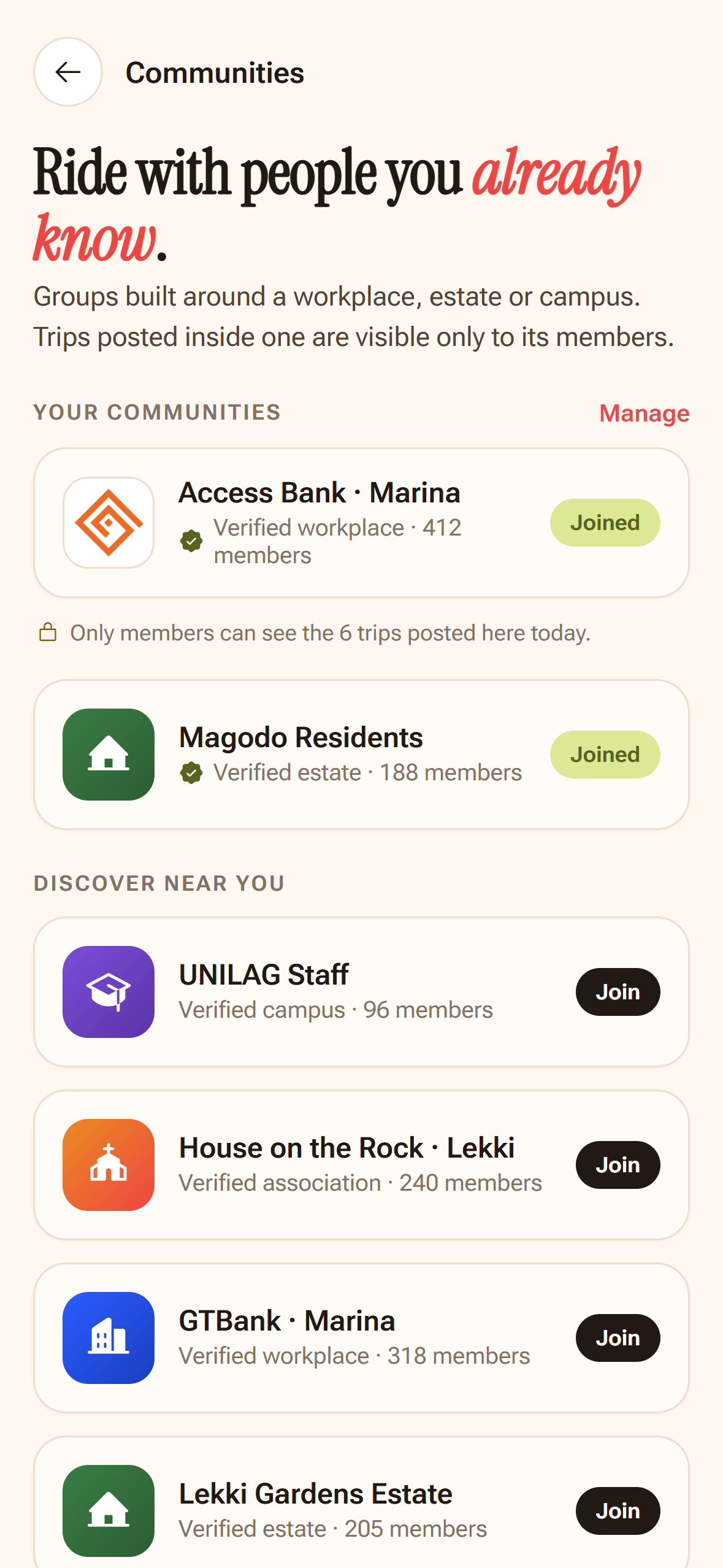
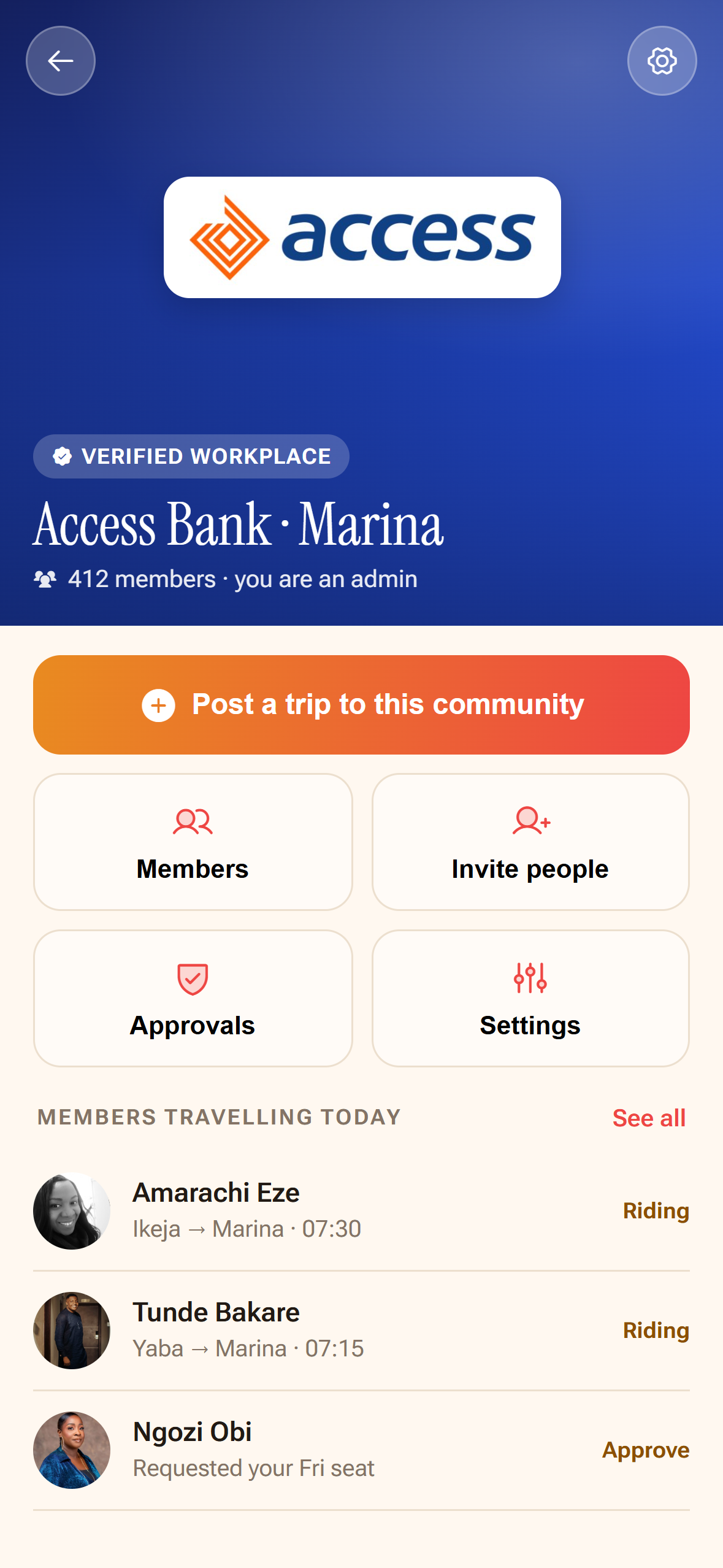
A verified stranger is one thing; someone from your own office, estate or campus is another. Create or join a community and the trips posted inside it are visible only to its members — a car owner can even restrict a seat to people from that community. It is the point where most people stop thinking of this as a service at all.
Start with your route
It begins with where you're going.
Tell Conductor the trip you make — where from, where to, and the mornings you travel. It finds the people already driving that road, and the seats open on it. Everything else on this page follows from that one search.
Why people join
Four reasons, and they compound.
These are the four things people tell us they came for. Most arrive for the first and stay for the third.
Spend a fraction of what you spend now
A seat costs a share of a journey, not the price of a whole car. For most people that is the single biggest monthly saving available to them.
Arrive at a time you can plan around
Trips are scheduled the day before, not summoned in the rain. You know who is driving, when they leave, and what it costs, before the morning starts.
Travel with people, not strangers
Corridors settle into regulars. Within a fortnight most people are riding with the same two or three faces — and inside a community, people from their own workplace or estate.
Take the guesswork out of your commute
No bus that never comes, no fare argued in the rain, no danfo that changes its route on a whim. You know the car, the driver, the time and the price the night before — the unpredictability of public transport is gone from your daily commute.
Money, in detail
Follow one week of fares across the car.
The money never jumps straight from passenger to driver. It moves a step at a time — into escrow, out per trip, back on a refund. Read it from the passenger on the left, through the app, to the car owner on the right.
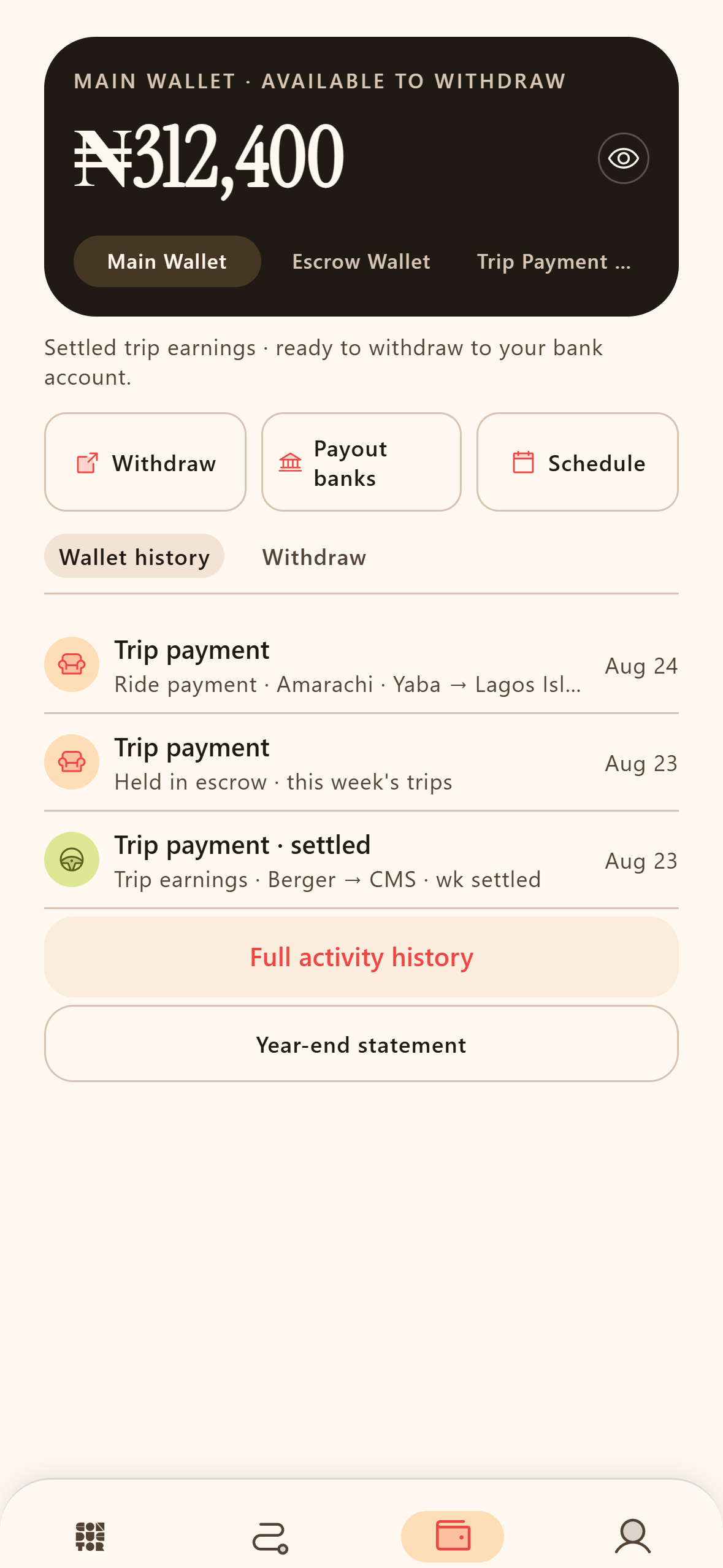
The car owner’s wallet — held in escrow, released trip by trip, refunded when a day doesn’t run.
Every trip you added to your schedule, settled in a single payment. The commute stops being a daily cash transaction.
Not one naira reaches them at payment. Conductor holds every fare in escrow — and the car owner is paid only at the end of the day, once that day’s trip has been completed.
The first trip of the week is completed exactly as scheduled.
Release is per trip, not per week. Monday lands in the car owner’s wallet; Tuesday through Friday stay held until each of those runs.
Plans change — for you or the car owner. If either side suspends a day the night before, that trip simply does not run, and you are never charged for a trip that will not happen.
Tuesday pays them nothing and penalises them nothing. A day that could not run is nobody’s fault.
The held amount returns to your wallet, in full. You only ever pay for the seats you actually travelled in.
Each remaining journey releases as it runs. By Friday every fare has been paid out for exactly what happened — no more, no less.
Get started
Ride it, or drive it.
Both apps are free to join. Start on whichever side of the journey you are on this week.